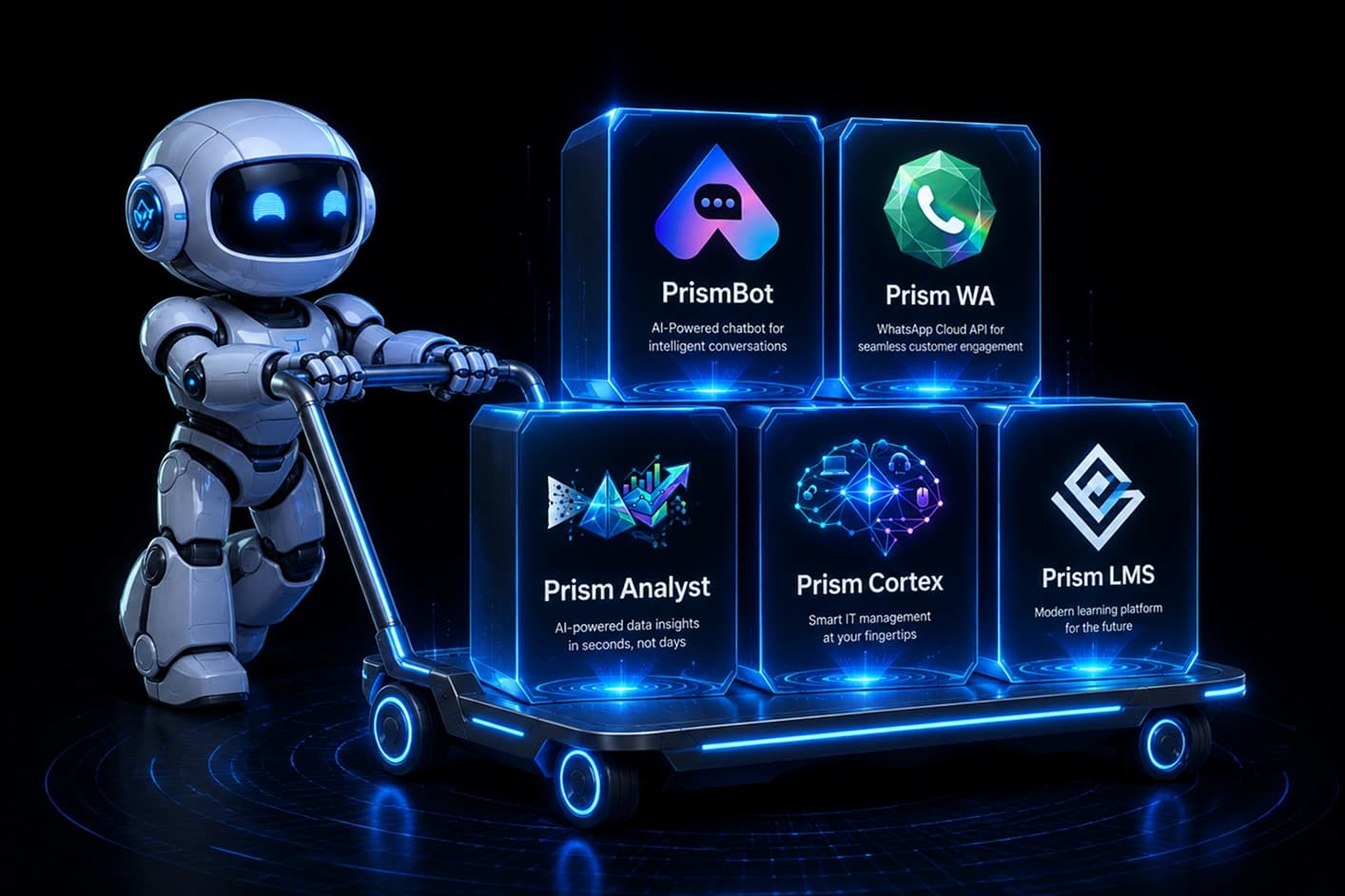
AI runs through every practice we have: generative AI, messaging, analytics, voice, and the applications around them. It cut one partner's per-minute voice cost by 60%, and it answers over company data with four times the retrieval relevance of naive search.
Five AI systems we designed, built, and deployed. Each links to the full engineering write-up, including the constraints and the decisions behind the numbers.
Voice infrastructure
Replacing a hosted voice provider with a self-hosted AI gateway
A social-impact foundation running AI voice surveys across India was locked into Exotel at Rs 0.50 per minute. We built an Asterisk-based gateway that speaks Exotel's exact WebSocket protocol and connects straight to carrier SIP trunks, so their existing AI voice applications moved across as a configuration change rather than a rewrite.
A multilingual voice AI pipeline on Bhashini for welfare surveys
A public welfare program needed citizen surveys across multiple Indian states, but its English-only system excluded most of the population it existed to serve. We built one speech-to-text, translation, and synthesis pipeline on Bhashini's Dhruva APIs, pre-generating static survey audio through queues and synthesizing only the personalized parts live.
A retrieval layer that made answers over company data trustworthy
Naive retrieval returned confident wrong answers, which on business data is worse than returning nothing. We rebuilt the layer underneath: structured ingestion before embedding, multi-query expansion with reranking, pgvector behind an HNSW index with tenant filtering applied before the similarity search, and a grounding agent that escalates when the evidence is not there.
AI-powered interview orchestration with evidence-cited scoring
High-volume hiring needed structured interviews without structured interviewer time. We built a multi-agent platform where an AI avatar conducts the interview over live WebRTC video, transcribes it as it happens, and scores five behavioural dimensions with every rating anchored to a verbatim transcript citation. A score with no cited source is rejected by the pipeline.
Course teams were spending more time producing assessments than teaching. We built a two-stage pipeline that extracts structured knowledge from a chapter first, then generates a quiz, flashcard set, mindmap, and summary from that knowledge base in parallel, streamed to the editor so authors work while generation continues. An abstraction layer over OpenAI and locally served Llama keeps quality and data sovereignty as separate dials.
Tell us the workflow, the data, and the constraints. In thirty minutes with the engineers who built the systems above, you get an architecture, a model strategy, and a run cost.
Prefer we come to you? Fill in the form below.
Tell us where to reach you
Takes under a minute. An engineer reads it, not a lead-scoring tool.