### Key Takeaways
- Construction ERP software integrates project management, procurement, billing, and collaboration tools into a unified platform
- Key benefits include real-time data access, streamlined workflows, and enhanced cross-team communication
- Successful implementation requires careful evaluation of scalability, customization options, and vendor expertise
- Cloud-native applications and mobile integration are driving the future of construction ERP solutions
- Tailored solutions from experienced development teams deliver better results than generic off-the-shelf options
## Understanding Construction ERP Software
Construction ERP software acts as a digital command center for construction companies, bringing together multiple business processes under one roof. While standard enterprise resource planning systems handle general business needs, construction-focused ERP solutions tackle the specific hurdles of project-based operations, intricate supply chains, and teams spread across various job sites.
These platforms merge project management, financial oversight, resource planning, and communication capabilities into a single, user-friendly interface. Construction professionals can handle everything from initial project estimates to final client payments within the same system, breaking down the information barriers that often hamper construction operations.
The system's strength lies in providing instant visibility across every project stage. Whether field crews are updating material deliveries, project managers are reviewing budget changes, or executives are coordinating subcontractor schedules, everyone works with the same current information. This coordinated approach shifts construction companies from constantly putting out fires to staying ahead of potential issues.
## Key Features of Construction ERP Software
Today's construction ERP platforms pack specialized tools built specifically for construction industry demands. Construction management software capabilities anchor these systems, delivering comprehensive project oversight from initial planning through final completion.
Construction project management software features encompass detailed scheduling capabilities, resource tracking tools, and progress monitoring displays. Project managers use these tools to orchestrate complex timelines, spot potential delays before they derail deadlines, and maintain clear oversight of project status across multiple active jobs.
Construction procurement software functionality simplifies purchasing through automated vendor management, purchase order creation, and delivery monitoring. Teams can evaluate supplier bids, handle approval processes, and track material expenses against budgets as transactions happen.
Construction billing software components manage the intricate invoicing demands typical in construction projects. These capabilities handle progress billing, change order management, and client payment monitoring. The system calculates billing amounts automatically based on work completion percentages and approved modifications.
Collaboration features maintain steady communication between field crews, office personnel, and external partners. Document sharing, photo uploads, and instant messaging keep everyone updated on project developments and issues needing immediate attention.
## Benefits of Implementing Construction ERP Software
Construction ERP software produces tangible improvements in how efficiently operations run and how well teams work together. Instant data access removes the delays and mistakes that come with manual reporting and spreadsheet-based tracking methods.
Better collaboration develops when teams get immediate access to project details no matter where they're working. Field supervisors can submit progress updates from construction sites while office staff instantly see those changes reflected in project displays and financial summaries. This openness cuts down on miscommunication and keeps everyone working with fresh information.
Smoother operations emerge from automated processes that replace manual, paper-heavy procedures. Purchase requests move through digital approval channels, invoices create themselves based on completed milestones, and compliance paperwork gets filed and monitored systematically.
Financial clarity improves significantly as expenses get monitored in real-time against project budgets. Project managers can catch cost increases early and make adjustments before they seriously damage profitability. This forward-thinking approach to cost control frequently determines whether projects succeed financially.
Resource management becomes more effective when managers can view equipment usage, labor distribution, and material supplies across all active projects. This oversight supports smarter decisions about resource deployment and reveals opportunities to boost efficiency.
## Choosing the Right Construction ERP Software
Finding the right construction ERP software demands thorough assessment of your company's particular requirements and expansion goals. Scalability represents a crucial consideration – the platform must support your current project load while growing with future needs without slowing down.
Customization options dictate how effectively the software fits your established business methods. Construction companies typically develop specialized processes through years of experience. The proper ERP system should work with these methods instead of demanding you completely rebuild your operations.
Partnering with a seasoned custom software development company offers substantial benefits during selection and setup phases. These professionals grasp both the technical intricacies of ERP systems and the practical demands of construction work.
An enterprise software development company contributes essential knowledge in connecting complex systems and ensuring they function dependably under actual working conditions. They can evaluate your needs objectively and suggest solutions that match your business goals rather than simply pushing particular products.
Support quality from vendors impacts long-term success more than many companies first understand. Construction projects cannot pause for technical support responses, so select vendors with demonstrated histories of quick, knowledgeable support teams.
## Case Study: ConstructIQ Multi-Tenant Construction ERP
The [ConstructIQ case study](https://codeprismtechnologies.com/case-studies/constructiq-multi-tenant-construction-erp) illustrates how customized construction ERP solutions tackle industry-specific obstacles. This multi-tenant construction ERP platform shows the advantages of purpose-built software created specifically for construction processes.
ConstructIQ represents modern construction ERP design with its modular monolith structure that offers flexibility while keeping system unity. The platform incorporates workflow automation features that handle repetitive tasks and cut down on manual data entry needs.
The platform's WhatsApp integration capability shows how construction ERP systems can adopt familiar communication methods to boost user acceptance and team collaboration. This connection lets field teams get updates and share details through platforms they already use every day.
Operating as a multi-tenant SaaS platform, ConstructIQ shows how current construction ERP solutions can support multiple organizations while preserving data security and customization features. This method lowers setup costs and maintenance work while delivering enterprise-level functionality.
## Future Trends in Construction ERP Software
Cloud-native applications mark the path forward for construction ERP platforms. These designs deliver superior scalability, dependability, and integration abilities compared to traditional on-site systems. Cloud-native structures also allow faster feature releases and more adaptable customization possibilities.
Enterprise mobile app development keeps pushing ERP advancement as construction teams expect complete functionality from mobile devices. Field workers must access project details, record progress, and communicate with teammates without heading back to desktop computers.
Application modernization services assist construction companies in moving from outdated systems to current ERP platforms without interrupting active operations. This method keeps valuable historical information while providing access to modern features and capabilities.
Mobile integration reaches beyond basic app functions to include capabilities like offline data matching, GPS monitoring, and connections with construction equipment sensors. These features deliver unmatched insight into field activities and equipment performance.
Artificial intelligence and machine learning connections will boost predictive abilities, helping construction companies foresee project risks, optimize resource distribution, and improve cost estimation precision. These technologies will change construction ERP from reactive reporting systems to proactive management platforms.
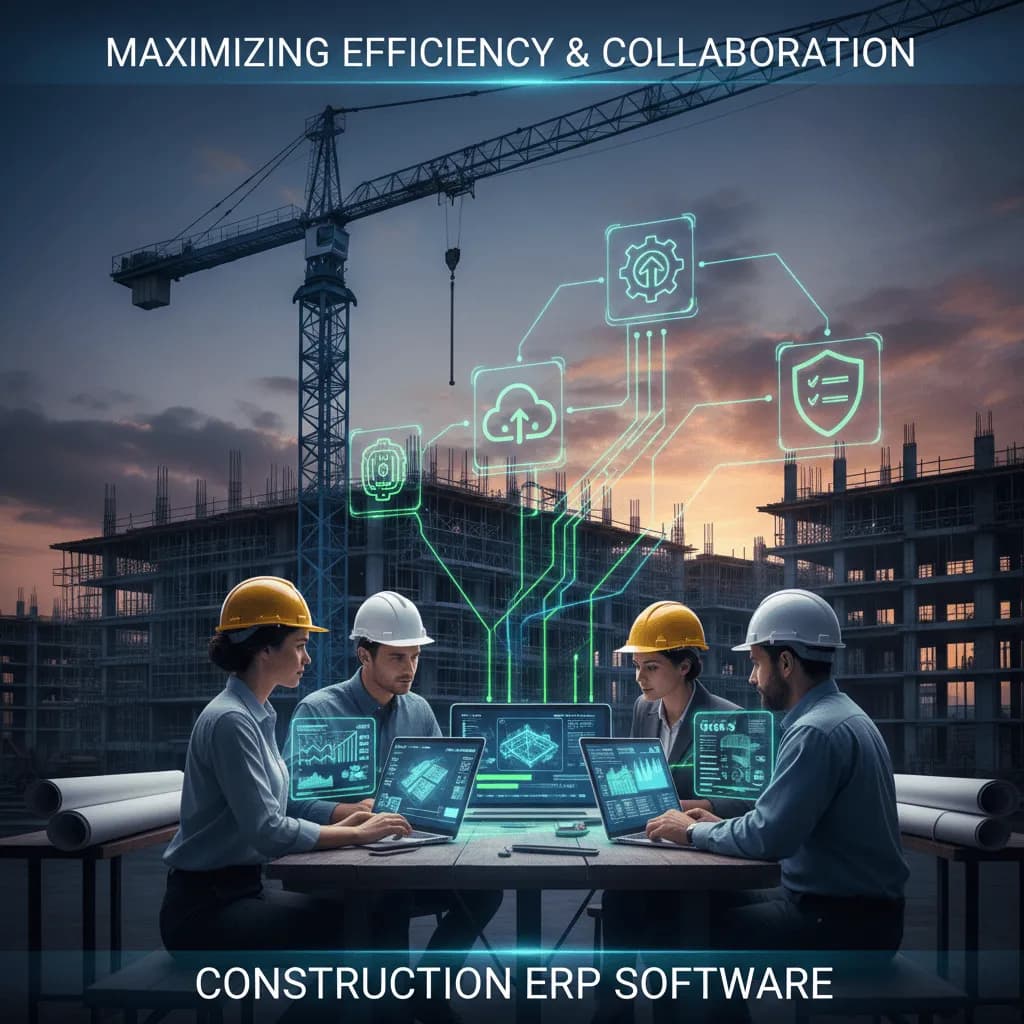
Construction ERP Software: Maximizing Efficiency
Deepak Mittal6 min read
Frequently asked questions
What is construction ERP software and how does it work?
Construction ERP software integrates multiple business processes including project management, procurement, billing, and collaboration into a unified platform. It works by centralizing data from all project activities, providing real-time visibility and enabling streamlined workflows across field teams, office staff, and external stakeholders.
What are the key features of construction ERP software?
Key features include project management tools for scheduling and progress tracking, procurement management for vendor and material coordination, billing capabilities for progress invoicing and change orders, collaboration tools for team communication, and financial reporting for budget monitoring and cost control.
What benefits does construction ERP software provide to construction companies?
Construction ERP software provides enhanced collaboration through real-time data access, streamlined processes via automated workflows, improved financial visibility with real-time cost tracking, better resource optimization across projects, and reduced errors from eliminating manual data entry and paper-based procedures.
How can companies choose the right construction ERP software?
Companies should evaluate scalability to handle current and future project volumes, assess customization capabilities to accommodate unique workflows, consider vendor support quality for reliable assistance, and work with experienced custom software development companies who understand both technical requirements and construction industry needs.
What are some real-world examples of successful construction ERP implementations?
ConstructIQ represents a successful multi-tenant construction ERP implementation that demonstrates purpose-built solutions for the industry. It features modular architecture, workflow automation, WhatsApp integration for familiar communication, and multi-tenant SaaS capabilities that serve multiple organizations while maintaining security and customization.
More articles


Ready to build something that matters?
We solve problems that don't have Stack Overflow answers. Let's talk.
Book a Discovery Call